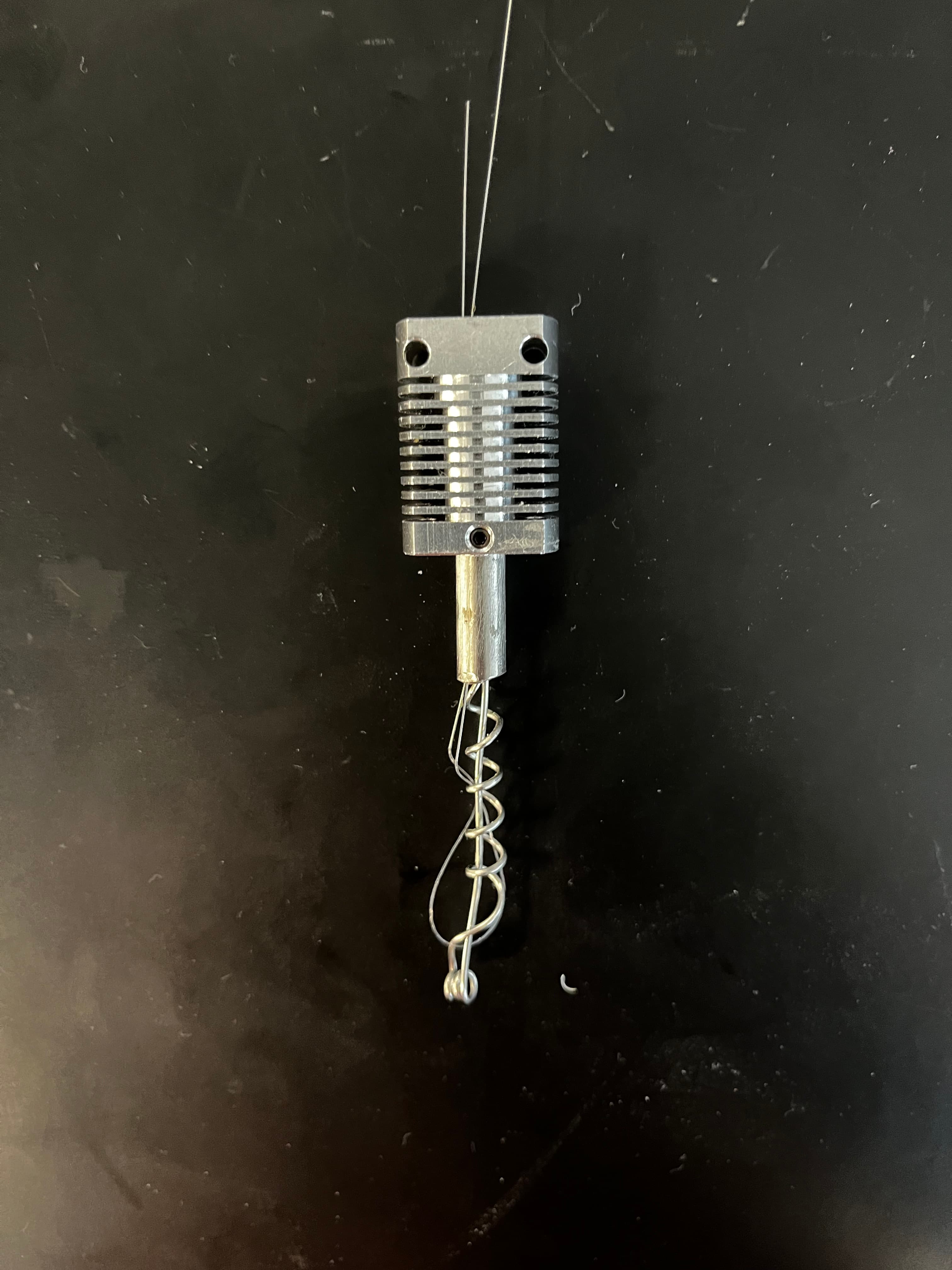
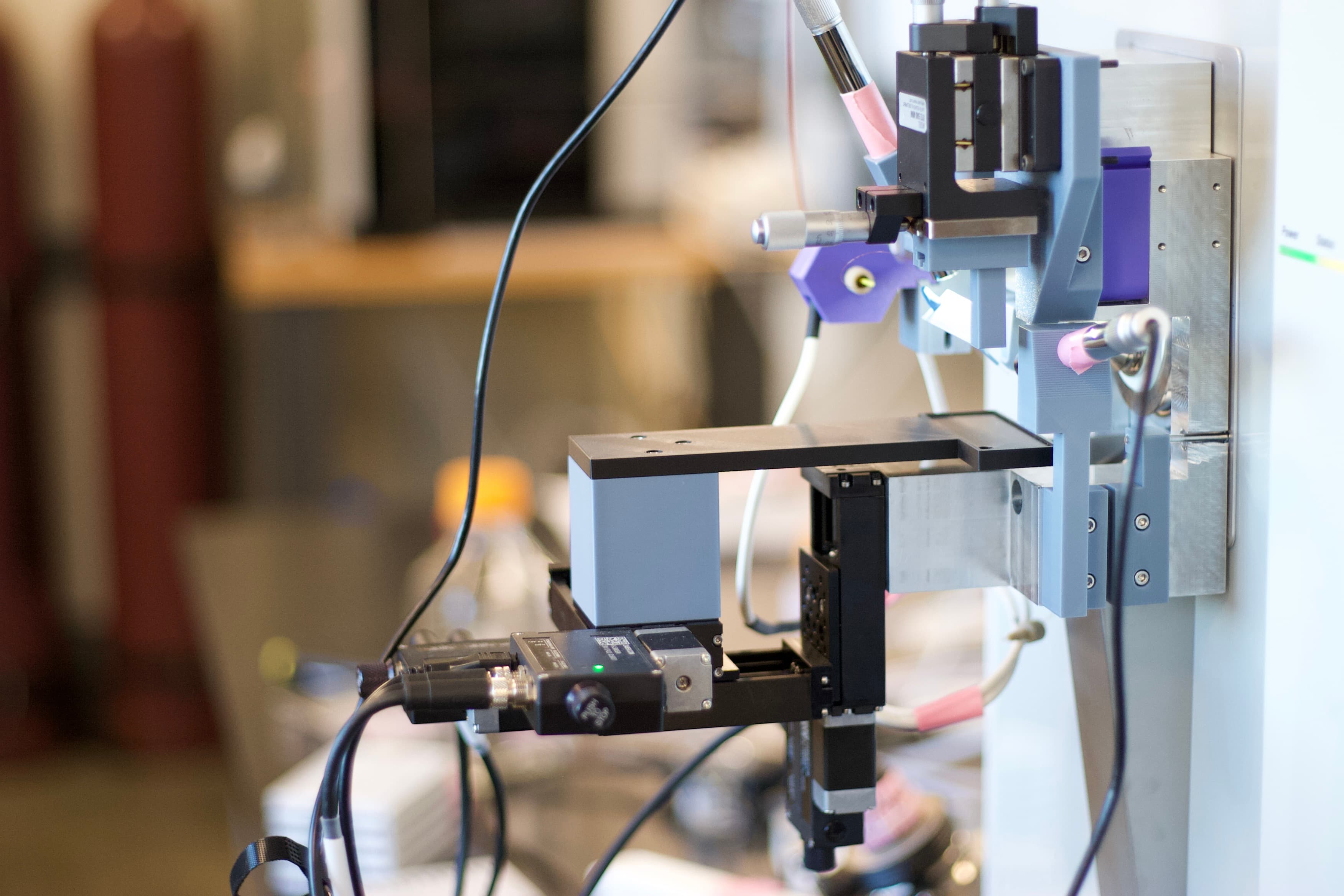
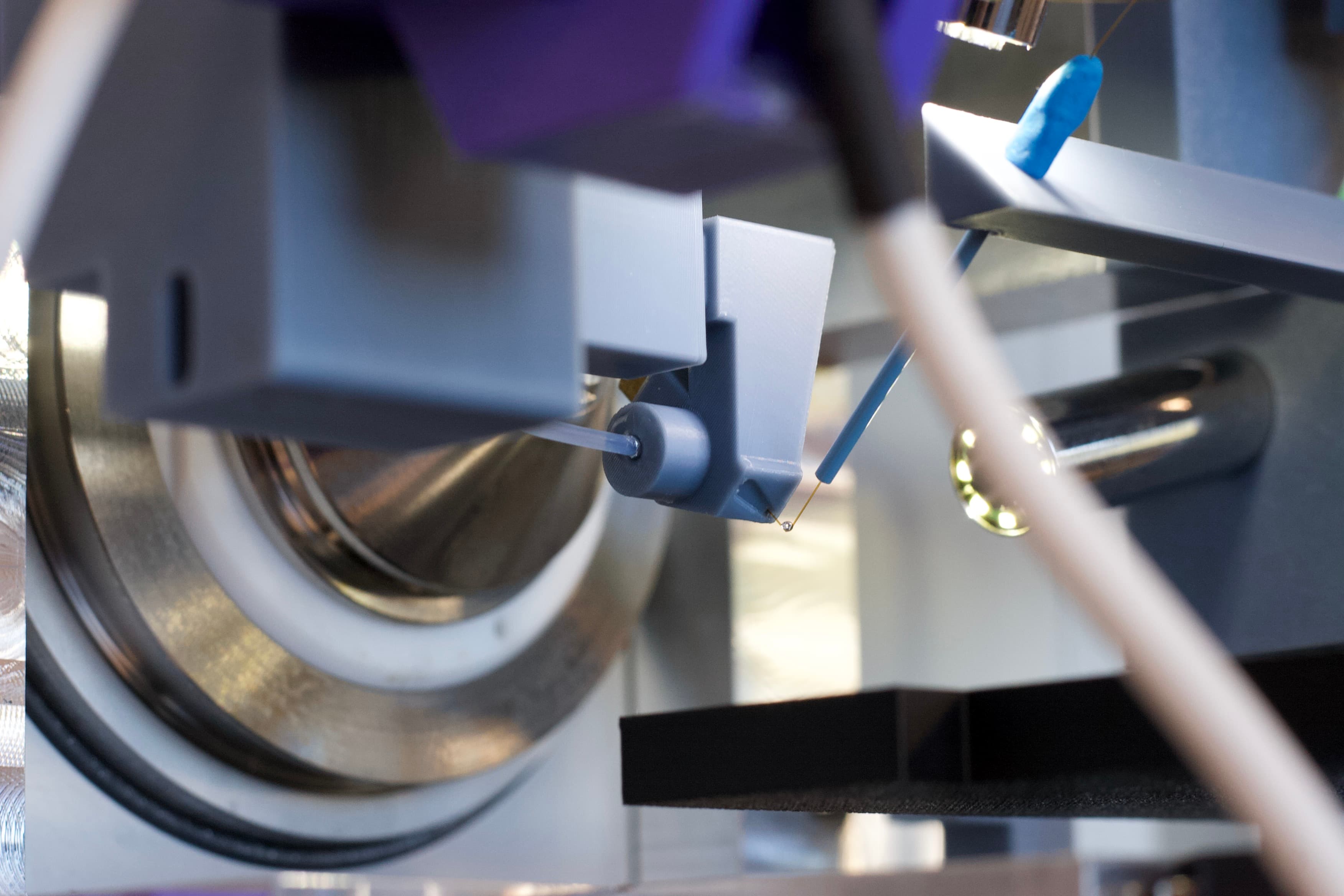
We use in nanospray desorption electrospray ionization (nano-DESI) MSI to build up molecular maps of tissues on the micron scale. There is no commercial nano-DESI source, so we build and customize our own. I've designed custom aluminum sources for the Exploris and Velos along with 3D-printed (FDM + SLA) parts to hold all the auxiliary pieces to make the experiment work. These prototypes are continuously evolving, so we're often modifying parts on the fly to work with new/improved experiments.
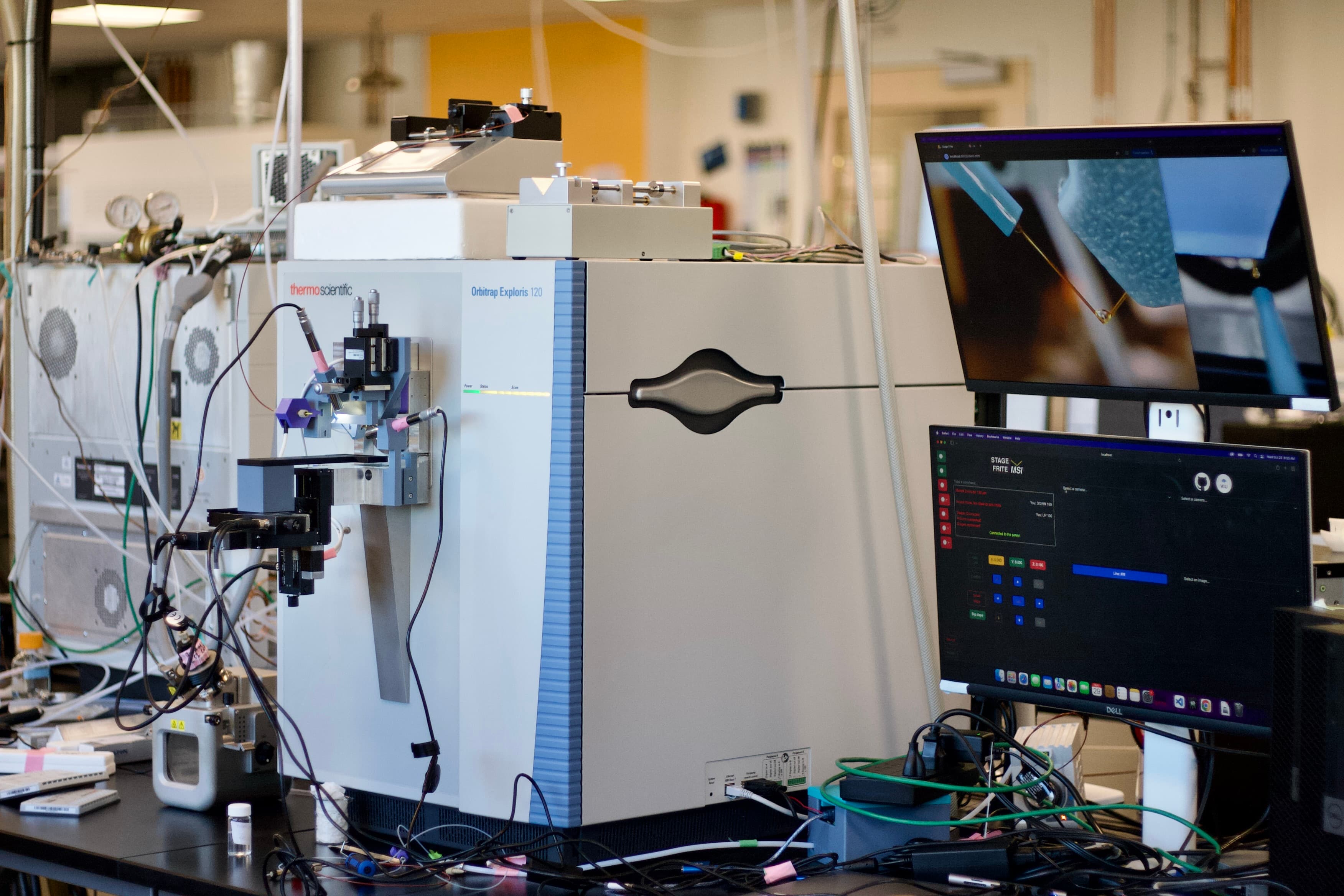
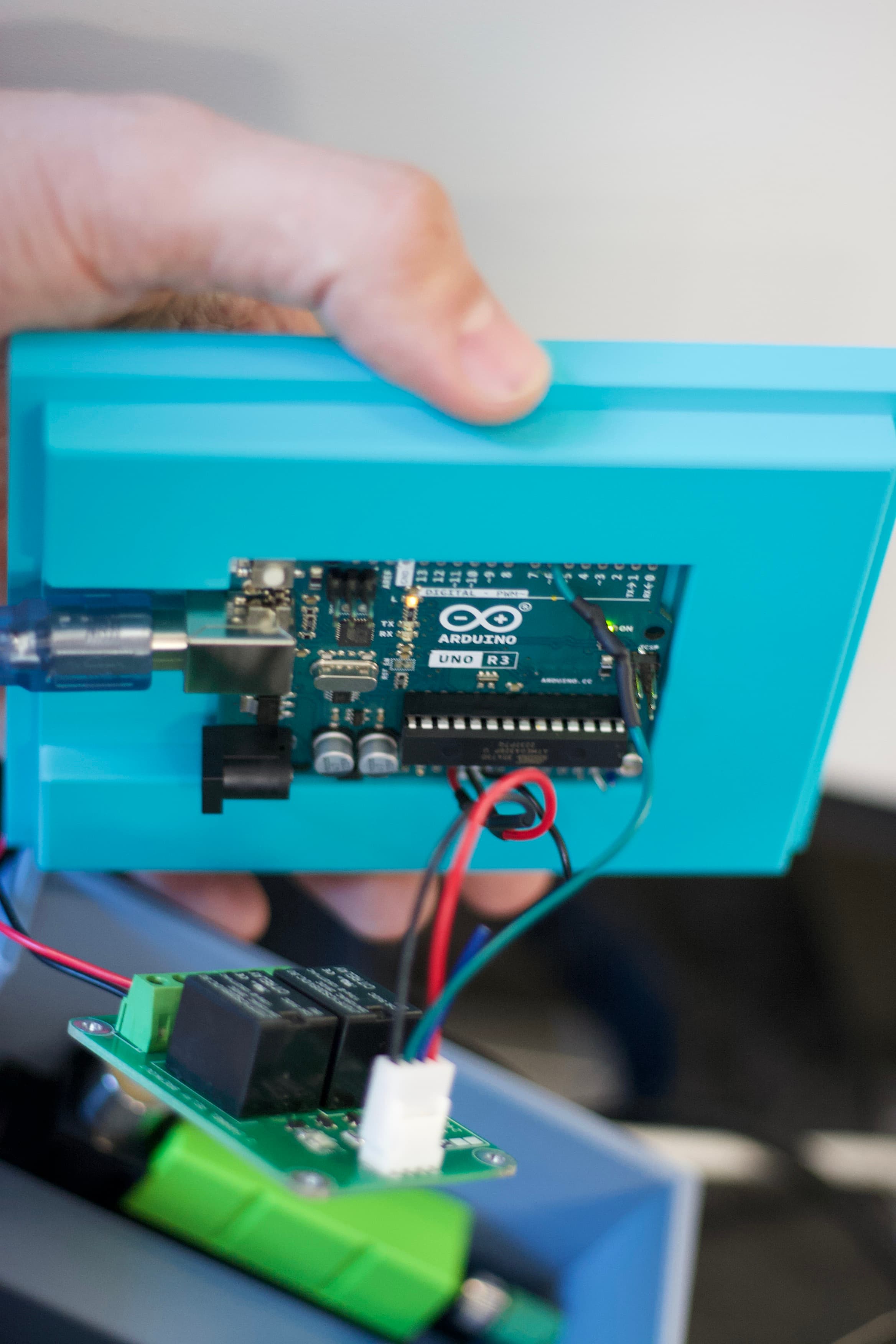
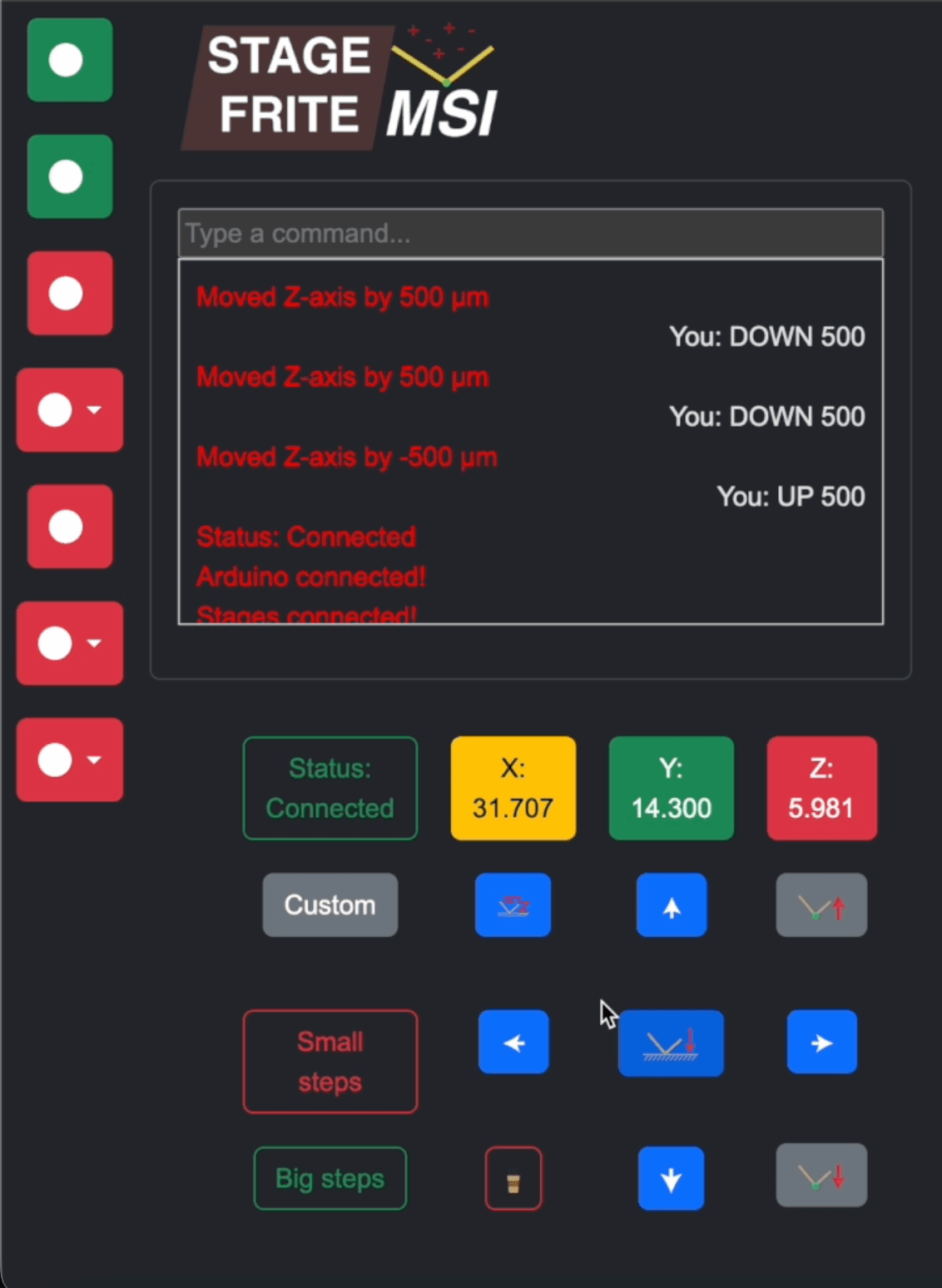
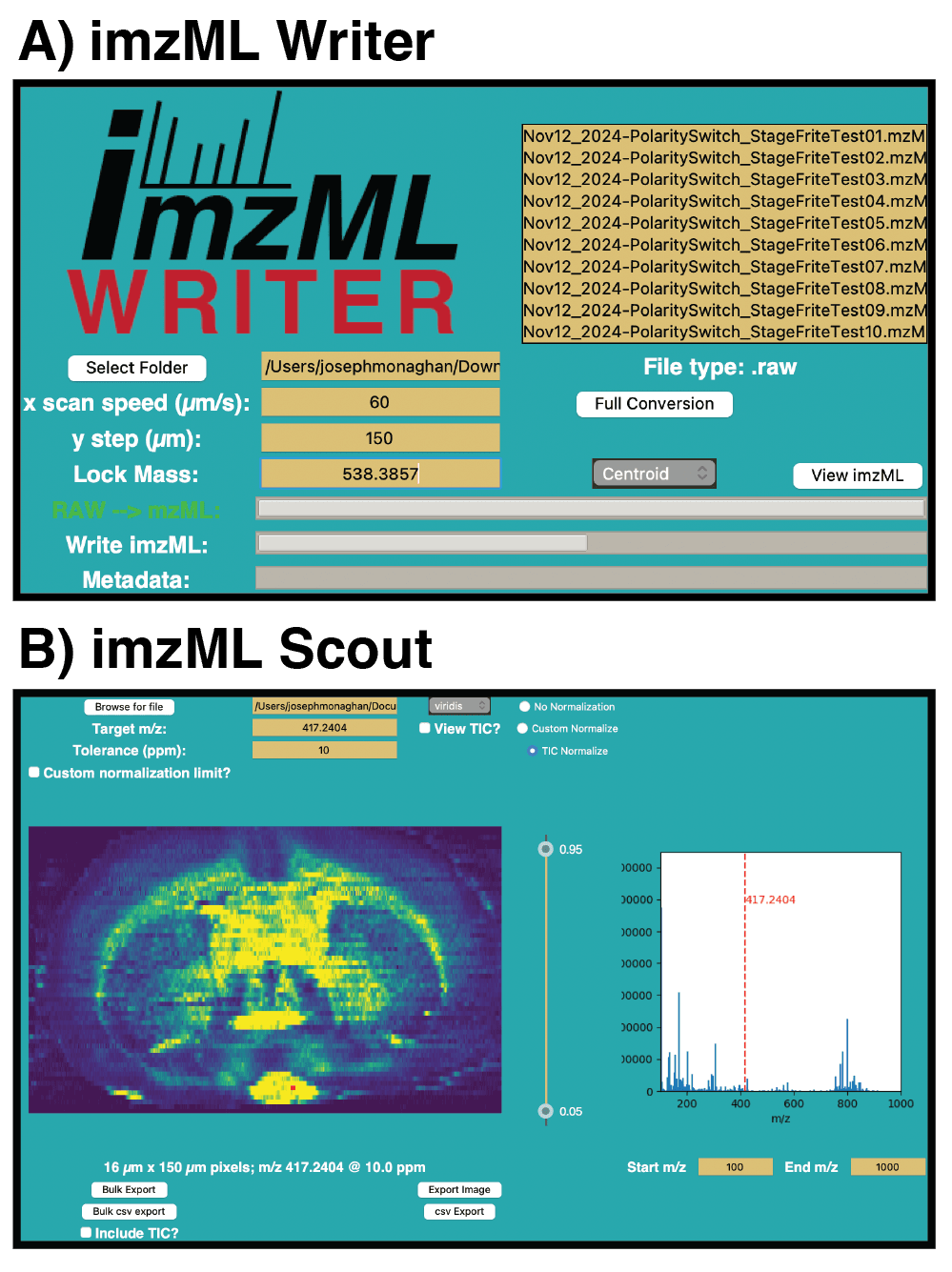
MSI generates enormous datasets, and emerging techniques like nano-DESI often require custom solutions. I've applied a host of languages to make modern, modular imaging software (StageFrite), user-friendly data processing tools to align-pixels and generate ion images (imzML Writer), and a data dissemination webapp to make sharing MSI data easier with non-specialist collaborators.


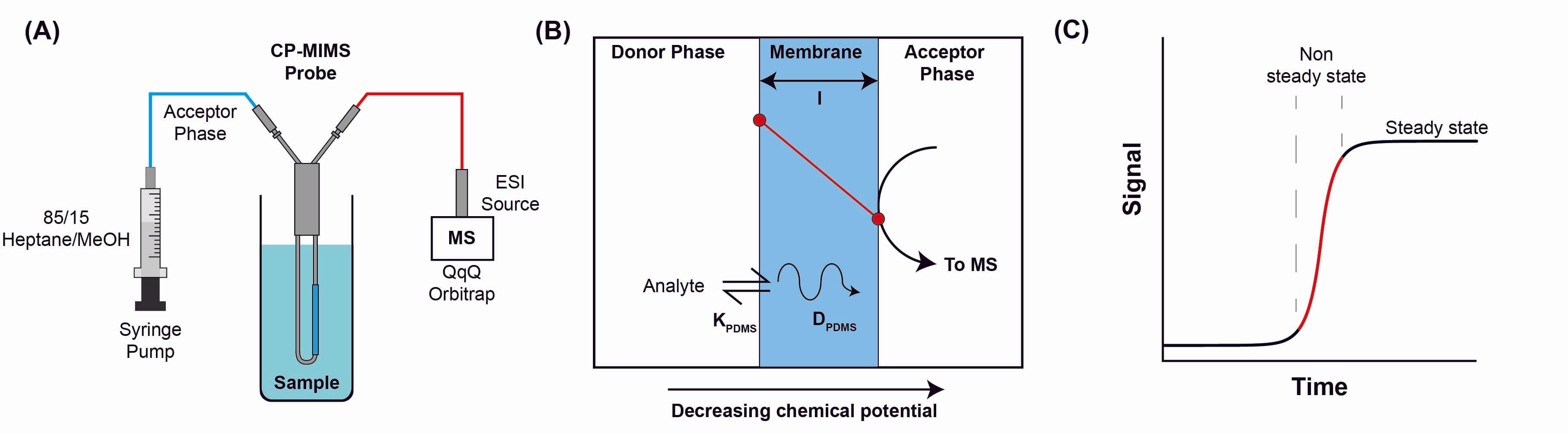
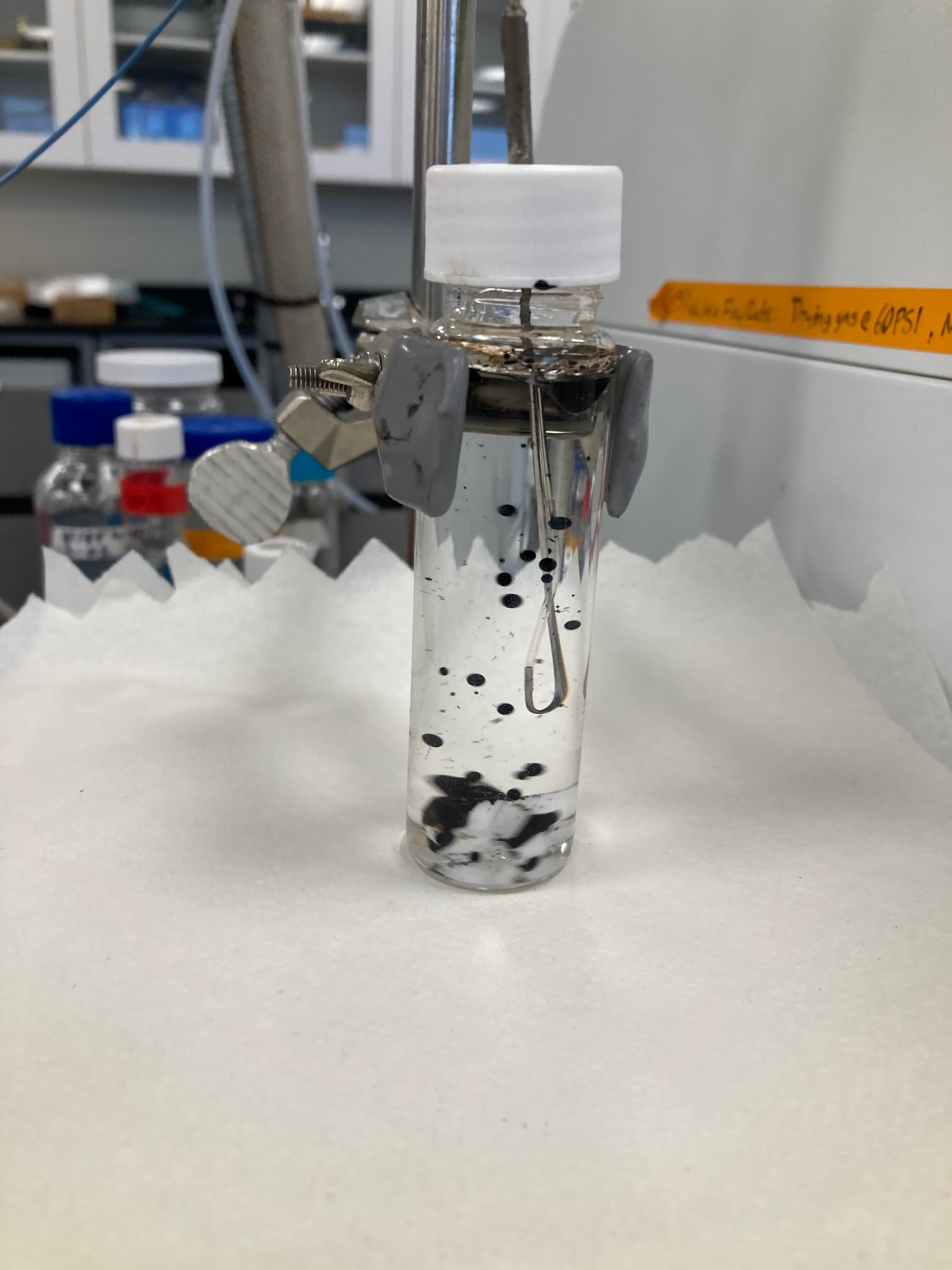
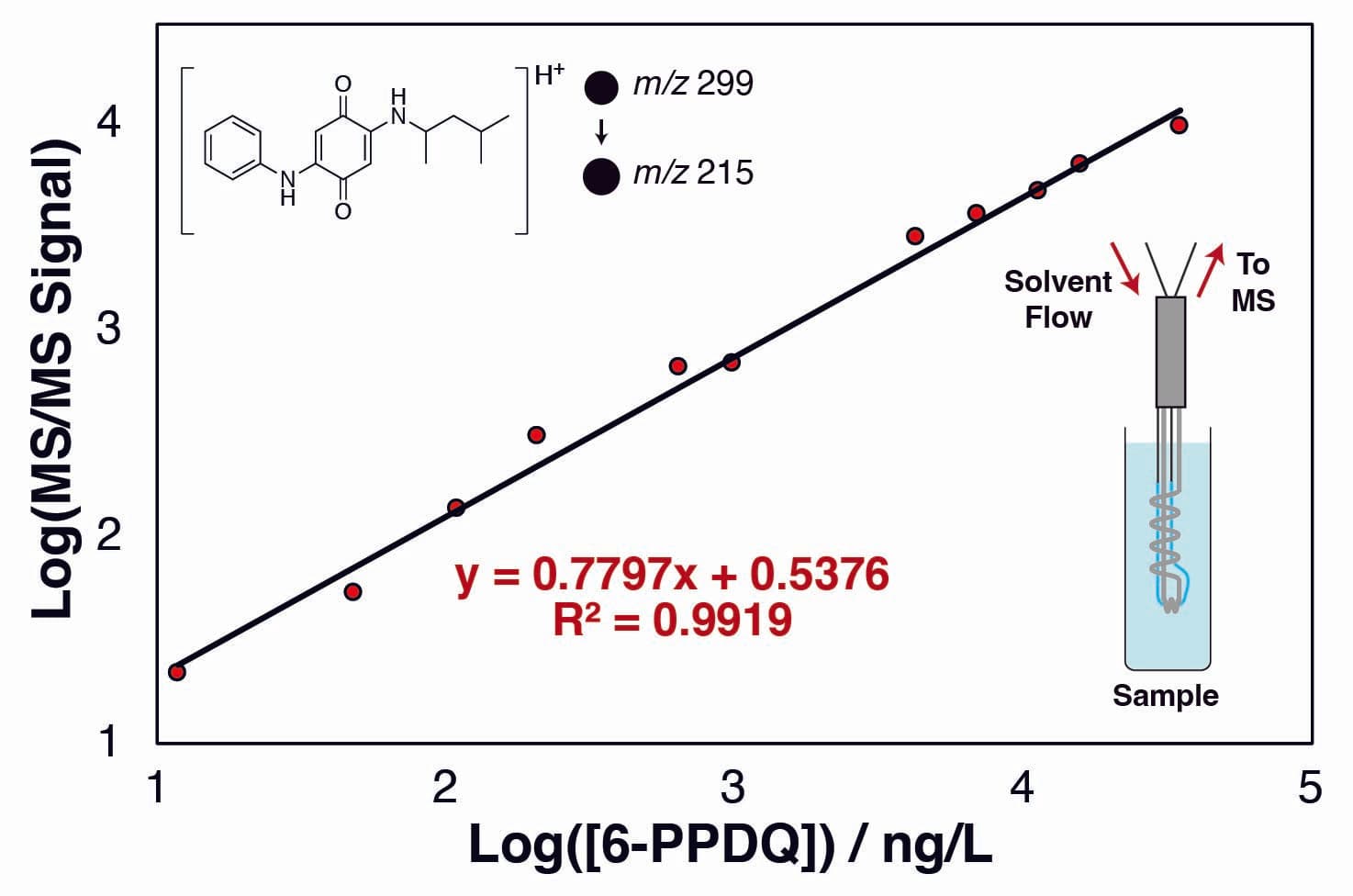
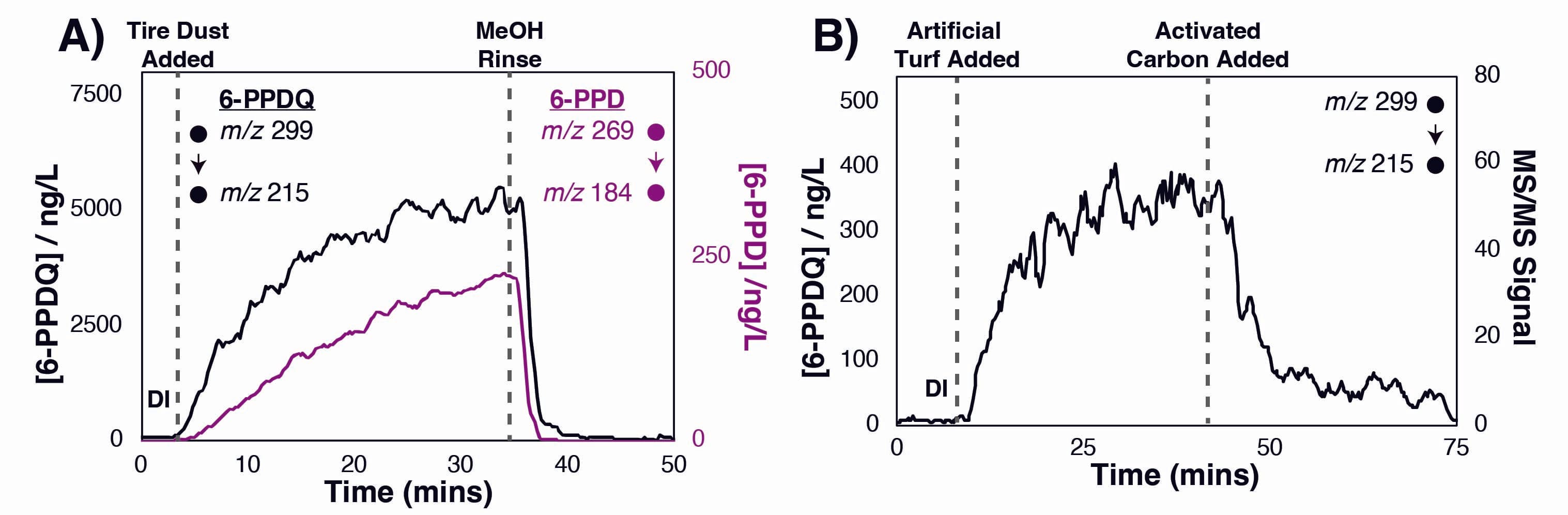
Preparing samples for mass spectrometry is often time- and labour-intensive. My PhD was spent developing condensed phase-membrane introduction mass spectrometry (CP-MIMS), which skips these steps by directly interfacing samples with a mass spectrometer using a semi-permeable membrane. This lets you turn around faster, cheaper measurements for small, hydrophobic compounds including environmental contaminants like 6-PPD quinone, naphthenic acids, PAHs, and various PPCPs.


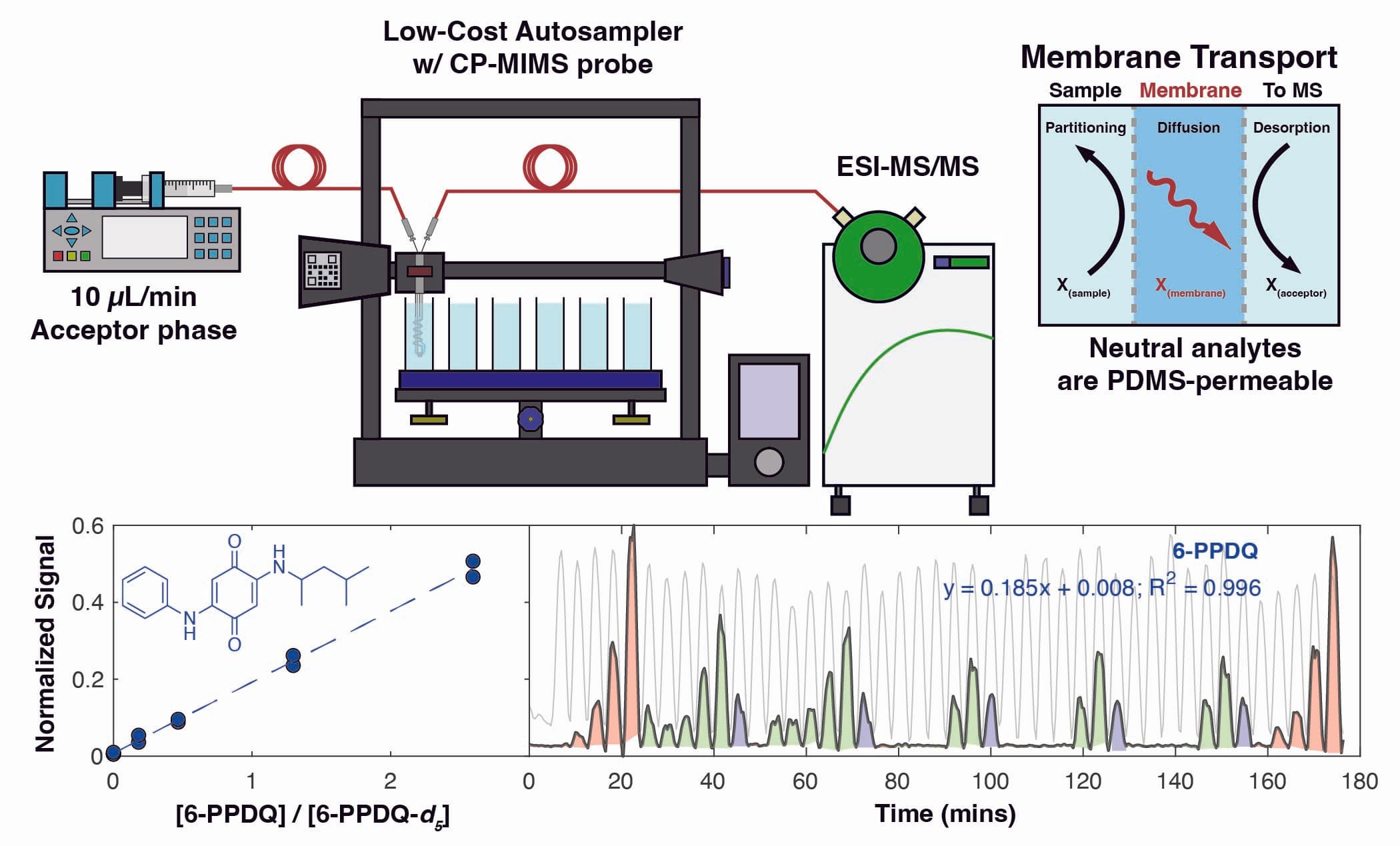
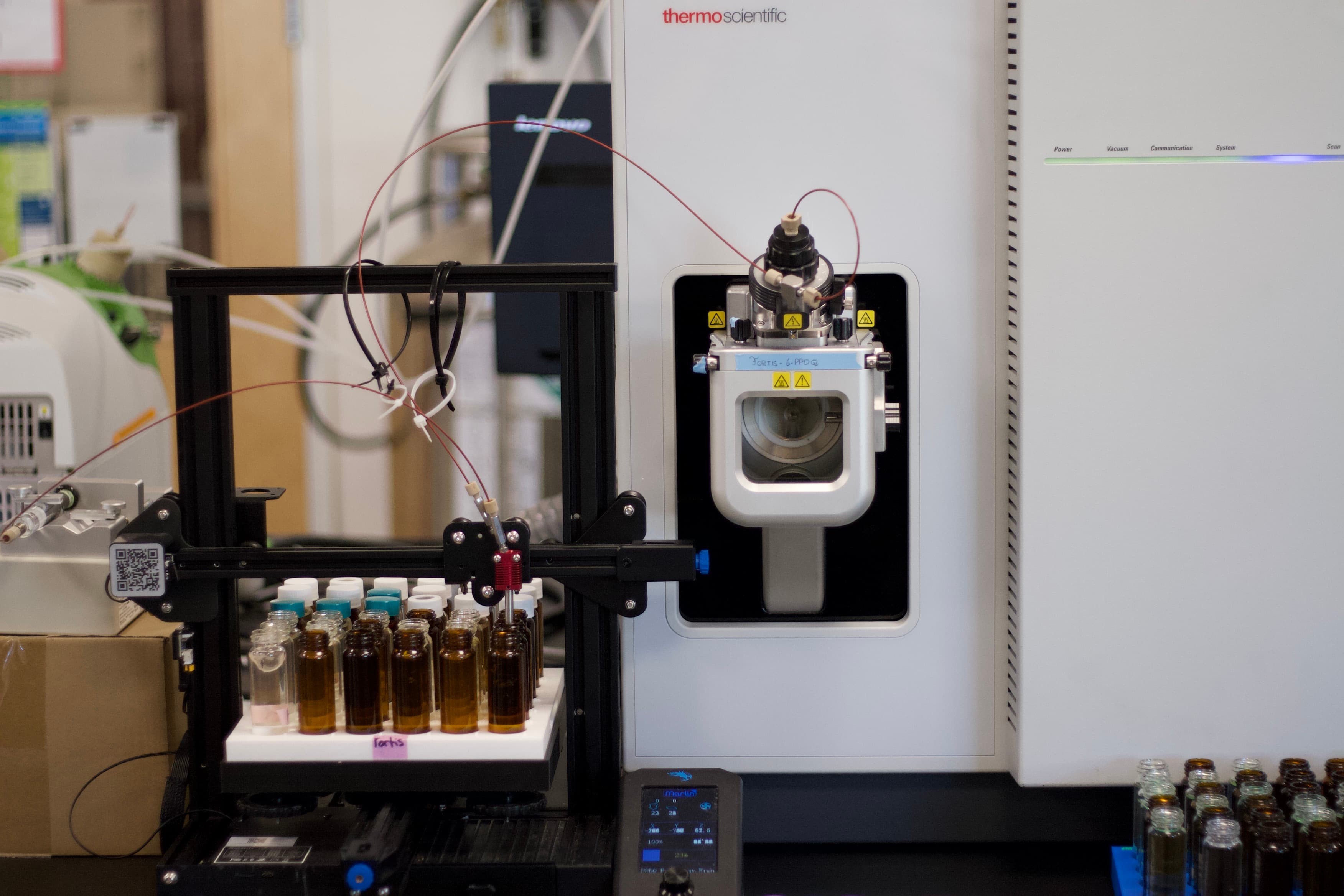
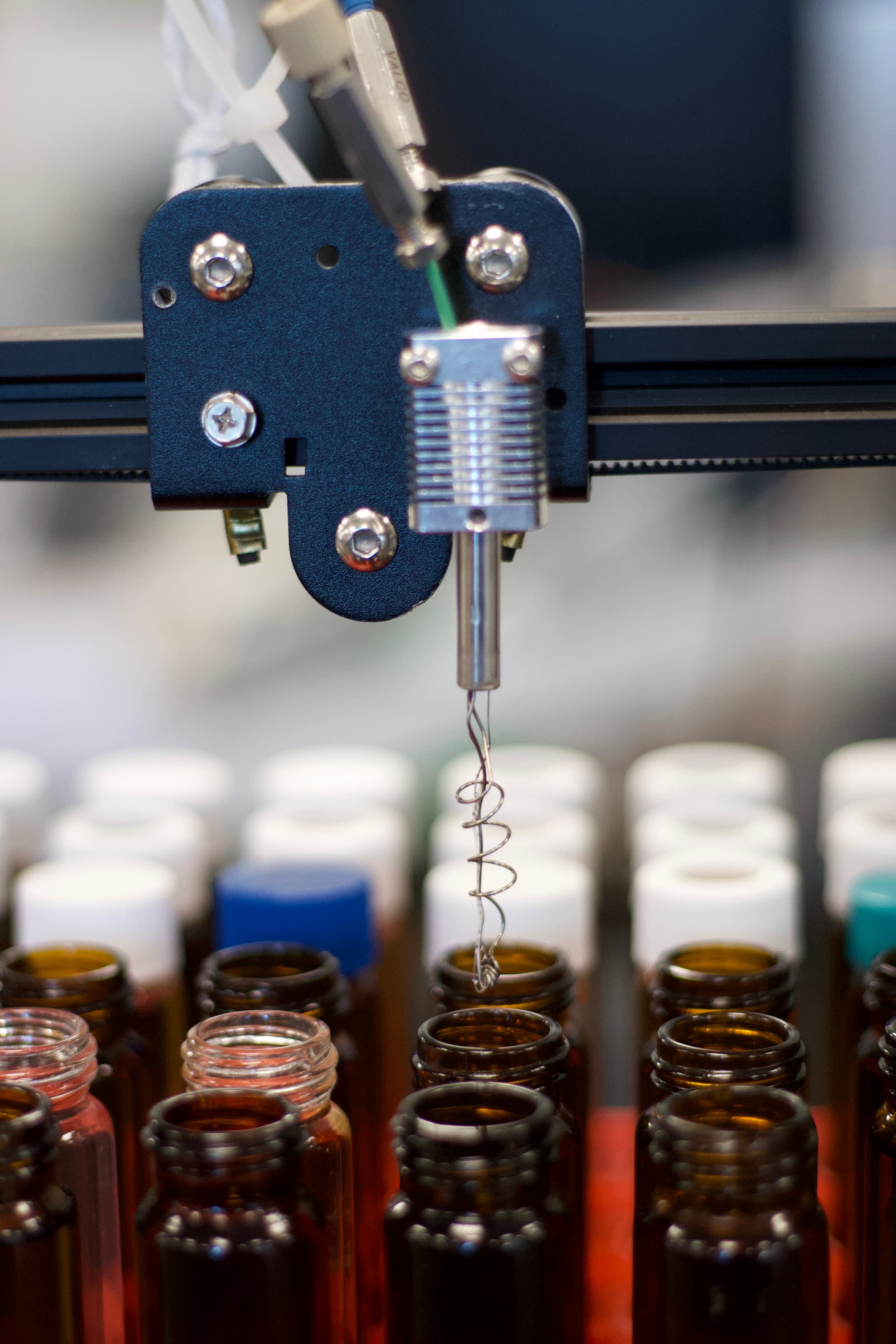
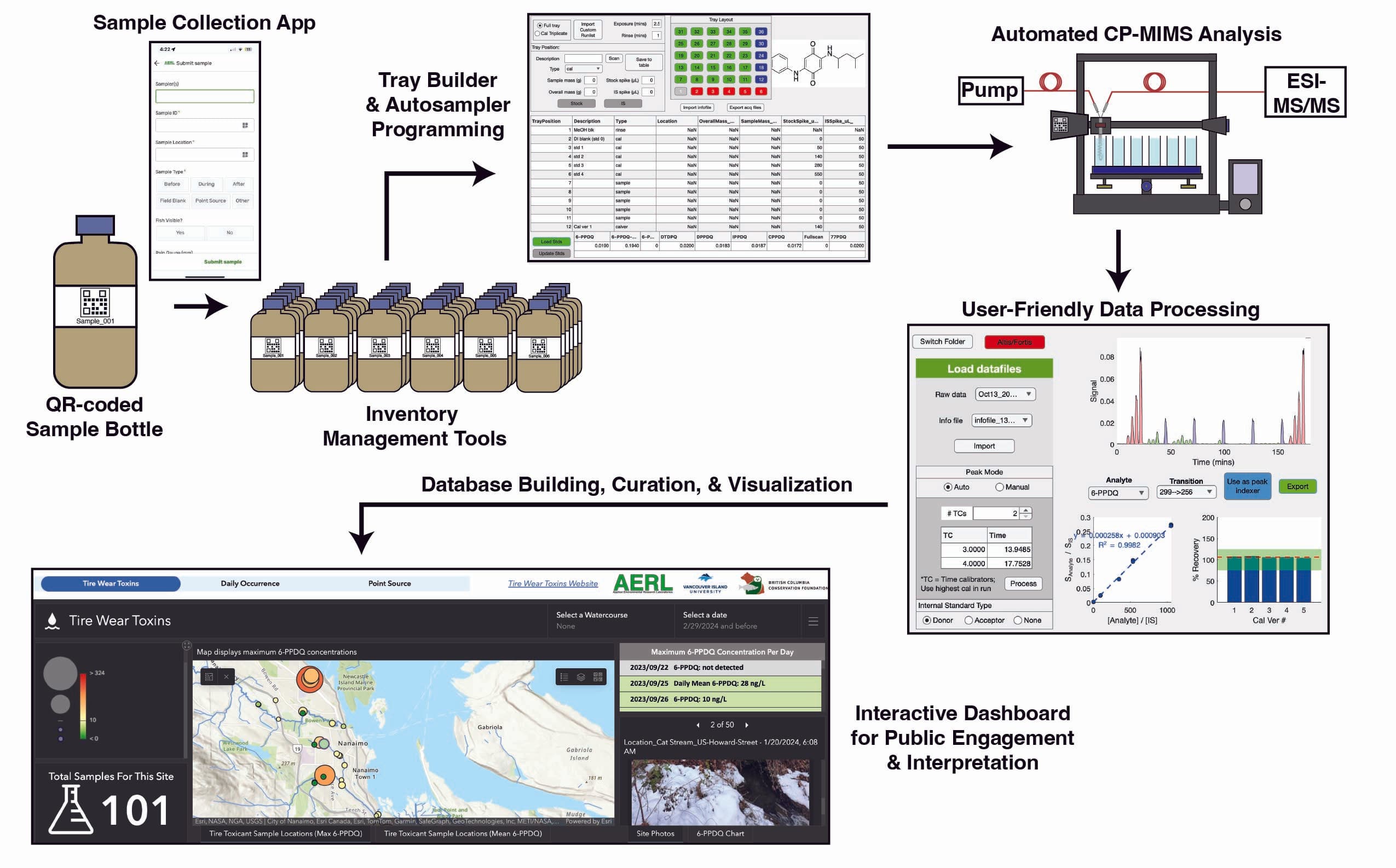
CP-MIMS is fast, and can turn around a 6-PPD quinone measurement in just 2.5 mins. To keep up with it, I repurposed a $300 Ender3 to work as an CP-MIMS autosampler - making it way easier to get through 100s of samples per day. Along the way, we developed a smartphone app to capture when/where samples were collected and data analysis/reporting tools in MATLAB to get results back out to stakeholders quickly. To date, more than 5000 samples have been measured through this pipeline.